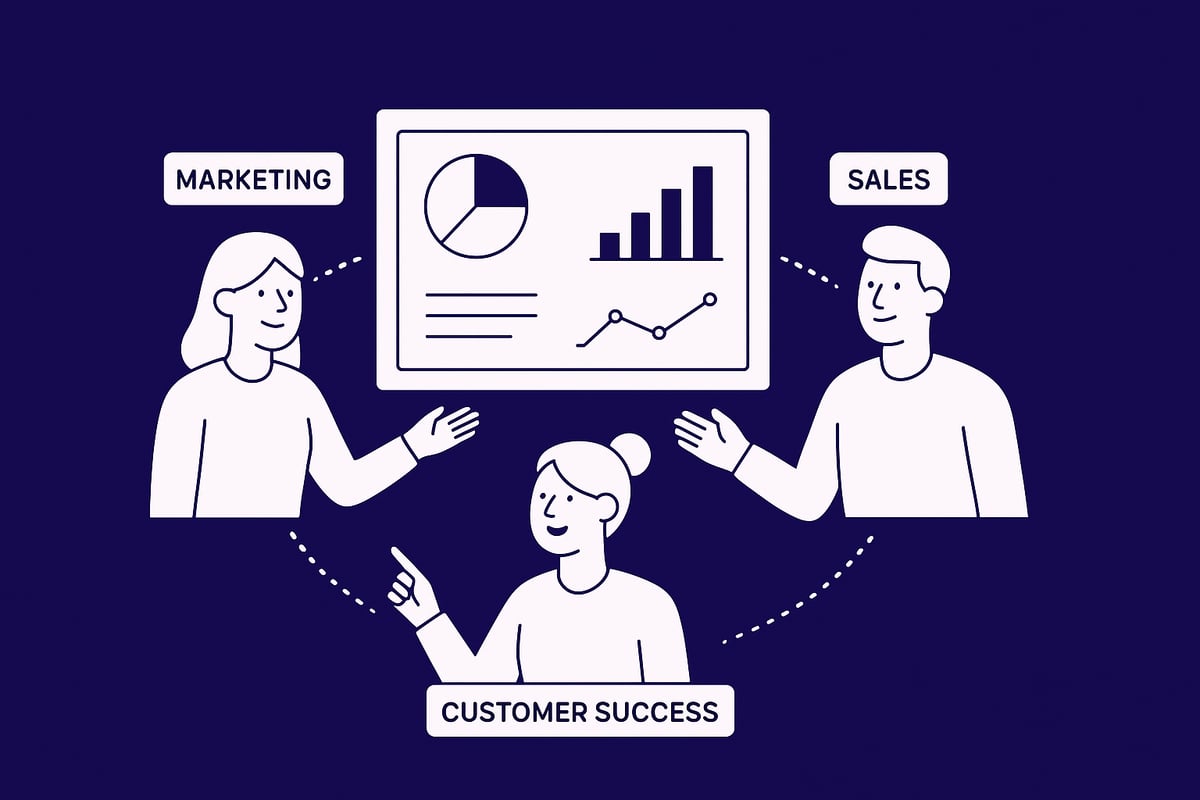

Want to implement HubSpot in 2026 without costly mistakes and with measurable results? If so, working with a HubSpot implementation consultant can be the difference between digital success and frustration.
For SMEs and growing businesses, the right consultant is the key to transforming processes and achieving a fast return on investment. In this guide you will find everything: from the expert's role to the implementation steps, from the benefits to the mistakes to avoid, through to the criteria for choosing the ideal solution and the trends shaping 2026.
If you want to maximise results and sidestep common pitfalls, keep reading — this is the definitive resource for driving your business growth with HubSpot.
Who Is a HubSpot Implementation Consultant and What Do They Do?
Have you ever wondered what a HubSpot implementation consultant actually does? This professional is the real engine behind every successful HubSpot implementation. Let's explore who they are, what skills they need, when they are truly indispensable, and how to choose the right level of consultancy for your business.
Definition and Strategic Role
A HubSpot implementation consultant is a specialist focused on introducing and optimising HubSpot within an organisation. Unlike a generic agency or partner, this professional concentrates on strategy, customisation, and concrete outcomes — becoming the go-to reference point for digital transformation and CRM management.
Their value is especially evident in SMEs and high-growth companies. According to recent statistics, 75% of businesses that engage a HubSpot implementation consultant achieve a higher ROI within 12 months. A practical example? Many companies have revolutionised their contact management and data automation by working with an expert, as explored in the article HubSpot CRM for SMEs.
The consultant does not simply configure the system — they also guide the cultural and operational change, ensuring every HubSpot feature is used to its full potential.
Required Skills and Certifications
To be a valuable HubSpot implementation consultant, certified and up-to-date competencies are essential. Key certifications include:
- HubSpot Solutions Partner
- CMS Implementation
- Marketing Hub
- Sales Hub
- Service Hub
Technical skills are complemented by soft skills: project management, problem solving, training delivery, and communication. On the hard-skills side, mastery of automations, data integration, and advanced reporting are fundamental.
Continuous learning is essential: only consultants who stay current with 2026 developments can guarantee lasting results. Many follow structured certification pathways, participate in workshops, and engage with international communities to remain ahead of the curve.
When Is It Essential to Involve a Consultant?
When do you truly need a HubSpot implementation consultant? Here are some typical situations:
- Migrating from another complex CRM
- Scaling business processes rapidly
- Managing complex workflows and advanced automations
- Requiring deep data customisation
A concrete example: companies that attempted a DIY approach often found themselves blocked by configuration errors or data loss. Engaging a HubSpot implementation consultant unlocks the platform's true potential and minimises risk — especially when signs of inefficiency, recurring errors, or poor cross-team integration begin to appear.
Differences Between Consultancy Levels (Core, Plus, Total)
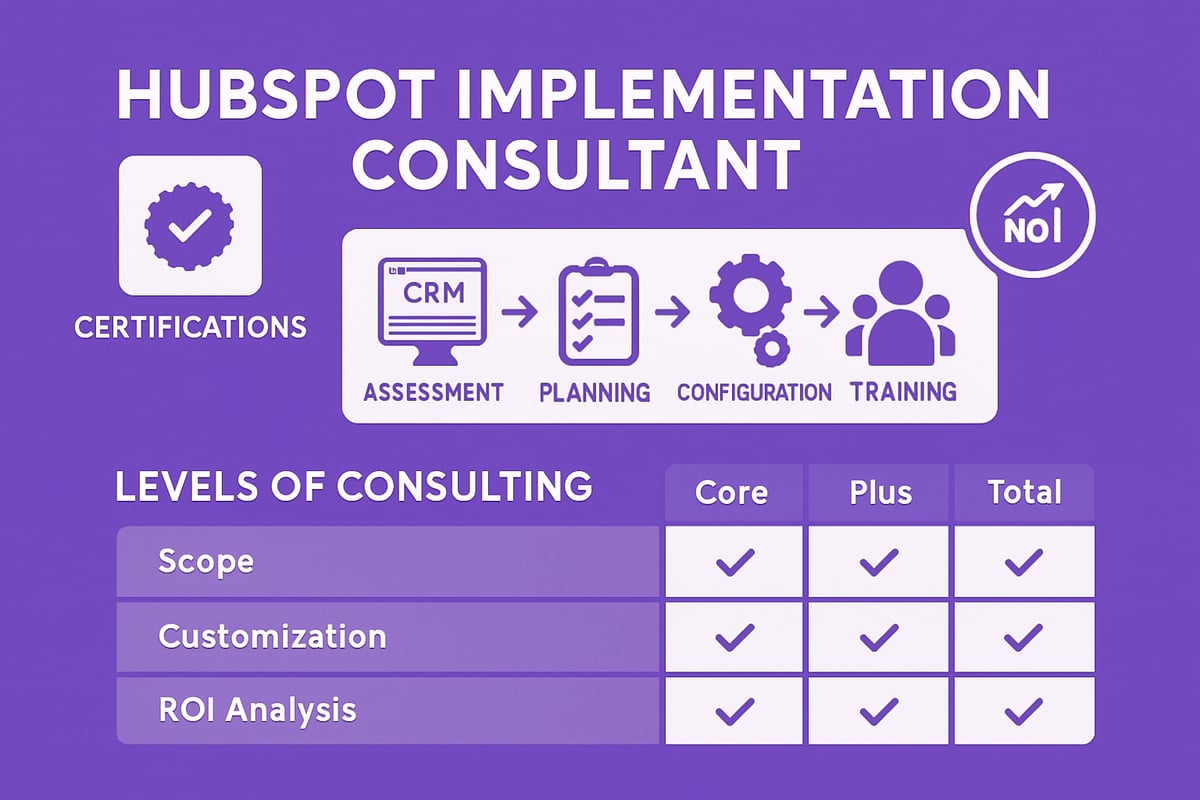
Not all HubSpot implementation consultant services are equal. The main tiers are Core, Plus, and Total, each offering a different degree of support and customisation.
| Level | What It Includes | Practical Examples |
|---|---|---|
| Core | Basic setup, team onboarding | Initial CRM configuration |
| Plus | Customisation, training | Tailored workflows, team training |
| Total | Advanced integrations, ongoing support | Data integration, after-care |
How do you choose? If you are an SME just getting started, the Core level may be sufficient. For more complex processes and rapid growth, Plus or Total deliver the scalability and measurable results you need. A HubSpot implementation consultant helps you identify the most suitable option, avoiding waste and maximising return on investment.
The HubSpot Implementation Process: Step by Step
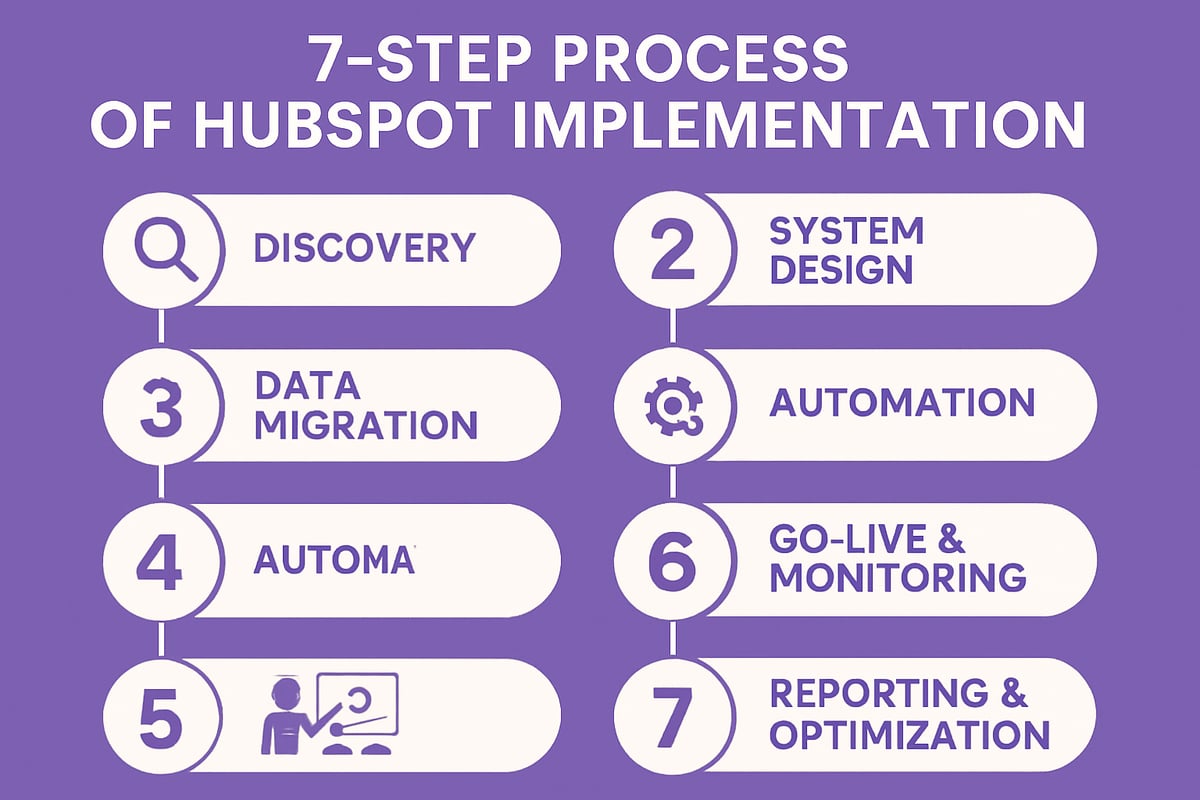
Implementing HubSpot effectively requires a well-structured process, guided by an experienced HubSpot implementation consultant. Each phase is critical to ensuring the CRM fits the business perfectly, minimising errors and maximising results. Here is how the journey unfolds, step by step.
Requirements Analysis and Discovery
In the first phase, the HubSpot implementation consultant leads workshops and interviews with all key stakeholders. Business processes are analysed, objectives are gathered, and existing workflows are mapped. This step identifies bottlenecks and improvement opportunities.
Key questions include: what are the main bottlenecks? Which data is truly useful? Benchmarking against CRM strategies for SMEs helps compare industry best practices, ensuring a solid starting point.
System Design and Configuration
In this phase, the HubSpot implementation consultant designs a tailored CRM structure that accounts for the company's specific needs. Prototypes or mockups are created to validate the design, and sales pipeline structures, custom properties, roles, and access permissions are defined.
A modular approach allows the system to scale over time. Best practice: avoid generic configurations and focus on customisation — this prevents errors and facilitates future business growth.
Data Migration and Cleansing
The HubSpot implementation consultant conducts a thorough audit of existing data, including cleansing, deduplication, and accurate information mapping. Migration follows a detailed blueprint to prevent the loss of critical data.
During this phase, contacts, companies, deals, and opt-out lists are imported. It is worth noting that 90% of failed projects stem from poor data management, so this phase must never be underestimated.
Process Automation and Customisation
Here the HubSpot implementation consultant configures workflows for lead nurturing, email automation, and task management. Email templates, landing pages, and documents are customised to reflect the brand and business requirements.
pipeline rules, lead scoring systems, and advanced segmentation are implemented. Practical examples include automations that send emails to qualified leads or automatically assign tasks to sales representatives, boosting day-to-day efficiency.
Testing, Training, and Team Onboarding
The HubSpot implementation consultant plans role-specific tests that simulate real-world scenarios. Interactive training sessions follow for marketing, sales, and customer service teams, supported by hands-on exercises and dedicated documentation.
Onboarding is completed with video tutorials and support materials. Feedback is collected before go-live to address any remaining issues. A well-trained team can increase platform adoption by up to 40%.
Go-Live, Monitoring, and Post-Launch Support
The go-live is planned by the HubSpot implementation consultant with careful attention to change management. After launch, the platform is monitored to identify and resolve any issues quickly.
Post-launch technical support, periodic updates, and ongoing maintenance are provided. Many consultants offer dedicated after-care services to ensure the solution remains effective and up to date over time.
Reporting, dashboard, and Continuous Optimisation
The HubSpot implementation consultant configures custom dashboard setups to monitor the company's key KPIs. Real-time reports enable fast, data-driven decisions.
Continuous process optimisation is fundamental: companies that monitor KPIs with advanced dashboard tools grow 30% faster. The consultant supports the business in ongoing performance analysis and improvement.
Benefits of Working with a HubSpot Implementation Consultant
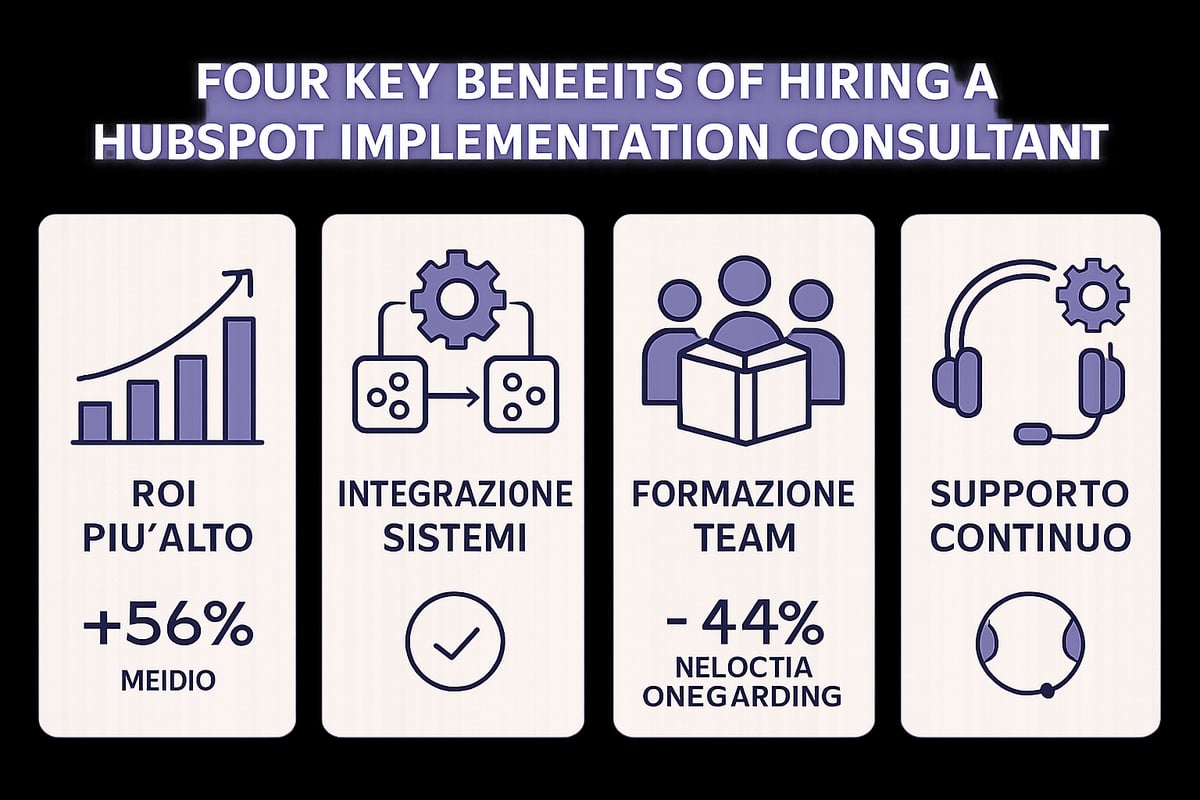
Engaging a HubSpot implementation consultant makes the difference between a simple installation and a genuine digital transformation. But what tangible benefits does this professional bring to businesses? Let's explore, with concrete examples and data.
Maximising ROI and Reducing Errors
A HubSpot implementation consultant helps achieve measurable, rapid results. Thanks to their experience, implementation timelines are shortened and common mistakes — such as incorrect configurations or faulty data imports — are avoided.
Companies that choose this approach save time and budget, reaching time-to-value faster. For example, many SMEs have seen a higher ROI within the first 12 months. An added benefit? The consultant bridges digital strategy with day-to-day operations, integrating inbound marketing and SEO best practices into the overall approach.