
Is your business ready to dominate growth in 2026? Today, RevOps strategies are changing the rules of the game for companies that want to make a real difference in the market.
In this guide, you will discover how to adopt RevOps to maximise results, break down silos between departments, and gain a clear, shared vision of growth.
We will help you understand what makes RevOps so effective, with concrete examples, current data, and practical advice.
Want to take your business to the next level? Keep reading and uncover the secrets of a winning strategy for 2026.
What Is RevOps and Why Will It Be Central in 2026
Businesses are going through a profound transformation: more complex markets, better-informed customers, and increasingly digital processes. In this landscape, RevOps stands out as the solution for companies that truly want to grow in 2026.
Definition and Key Principles of Revenue Operations
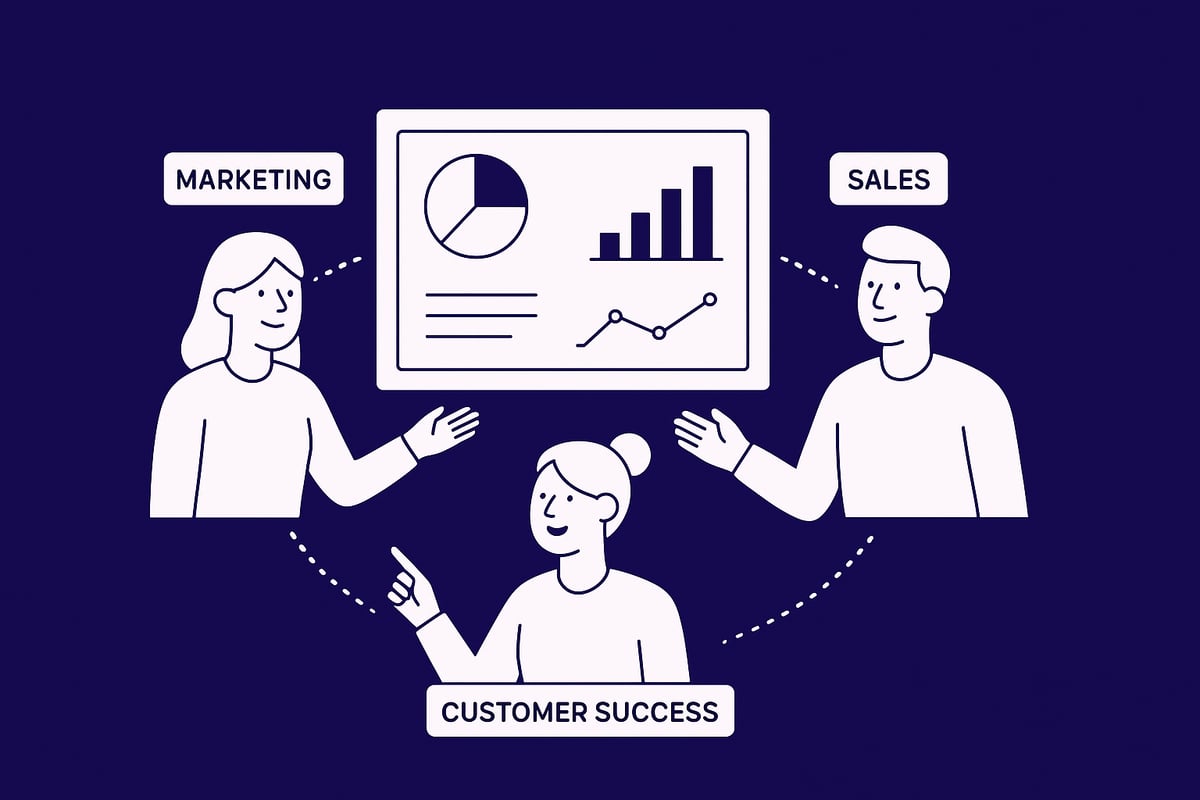
RevOps, short for Revenue Operations, is an operational model that transforms the way companies manage revenue. Instead of working in isolated silos, RevOps unites marketing, sales, and customer success into a single coordinated strategy.
The fundamental difference from traditional models? In the past, each department often operated with separate goals, data, and tools. With RevOps, everything is centralised. Processes, data, and technologies are shared, overcoming the silos that slow growth and create inefficiencies.
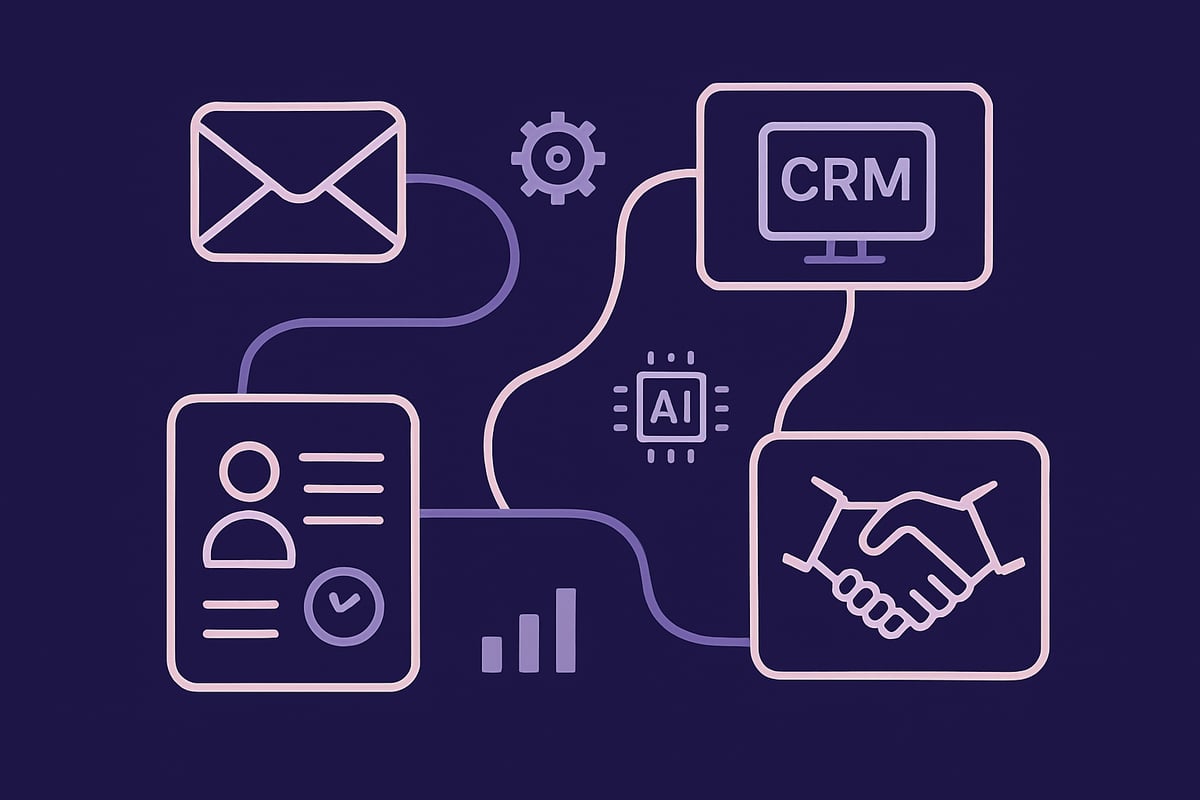
Consider a company that integrates its CRM, marketing automation platforms, and customer support systems into a single flow. With RevOps, every team has access to the same data, can monitor the same metrics, and act in a coordinated way. According to the Revenue Operations Alliance, 73.2% of RevOps professionals regularly track annual and monthly recurring revenue — a clear signal of how central visibility into numbers has become.
The customer journey today is more complex than ever. A potential customer may move from a social media campaign to a sales demo, all the way through to post-sale support. RevOps ensures consistency and fluidity at every stage, making the experience more effective for both the customer and the business.
Across the Gulf and globally, the growth of RevOps is evident. More and more SMEs are adopting this approach to gain efficiency, transparency, and the ability to make data-driven decisions. To explore how an integrated CRM and aligned processes form the foundation of RevOps success, you can read our guide on HubSpot CRM for SMEs.
The Strategic Advantages of RevOps for Business Growth
Implementing RevOps delivers concrete, measurable benefits. The first advantage is the elimination of silos: marketing, sales, and customer success no longer work in isolation, but pursue common goals and share information in real time.
This translates into greater productivity and consistency across departments. RevOps strategies improve the customer experience: every contact is managed in the most effective way, from the first click through to long-term retention. It is no coincidence that 59.8% of professionals consider close rate a fundamental metric for evaluating the success of RevOps initiatives.
Real-world examples show that companies adopting RevOps have recorded significant increases in both conversions and customer retention. Better allocation of budget and resources is another key strength: with a global view, investment goes where it is truly needed.
Process documentation and knowledge sharing become strategic levers. RevOps also helps build a consistent brand narrative, strengthening business reputation. And this applies not only to large corporations, but especially to SMEs that want to grow in a sustainable and scalable way in 2026.
RevOps Roadmap: How to Implement a Winning Strategy in 2026
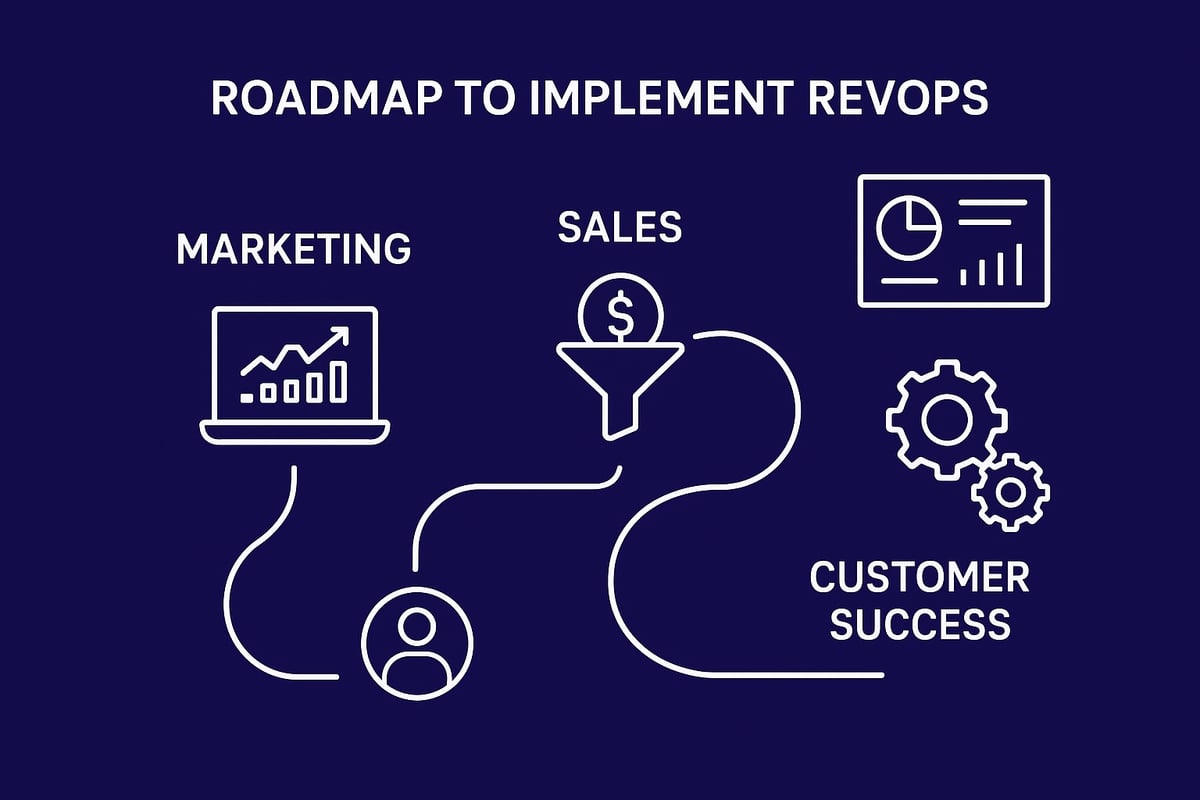
Implementing an effective RevOps strategy in 2026 is no longer optional — it is a necessity for any business that wants to drive growth. Let us walk through, step by step, how to build an operational roadmap that is concrete and tailored to your business.
Step 1: Analyse the Current State and Identify Silos
The first step of any RevOps strategy is a thorough analysis of the current situation. Map all processes across marketing, sales, and customer success. Ask yourself: where does the data flow break down? Which tools do not communicate with each other? Silos often form between the CRM, marketing platforms, and customer support systems.
Involve representatives from every function to gather different perspectives. Use assessment tools such as interviews, information flow analysis, and software audits. Keep in mind that 40.2% of companies do not yet have a dedicated RevOps budget. Identifying silos now will allow you to design a smoother transformation.
- Analyse data flows between departments
- Identify operational inefficiencies
- Involve stakeholders from the very beginning
A detailed analysis is the foundation of every successful RevOps project.
Step 2: Define Shared Goals and Common KPIs
Once you understand where to intervene, the second step of the RevOps roadmap is to set clear, shared objectives. All departments must work towards measurable results, not just individual targets.
Define relevant KPIs such as recurring revenue, close rate, and revenue retention. Implement centralised dashboard views to monitor these indicators in real time. Transparency around numbers increases collaboration and reduces conflict.
- Choose metrics aligned with business objectives
- Share KPIs across marketing, sales, and customer success
- Use automated reports to promote a unified view
51.3% of RevOps professionals consider recurring revenue the primary metric for engaging stakeholders. A cross-functional measurement culture is the backbone of the strategy.
Step 3: Choose the Right Technologies and Enabling Tools
Selecting the right tools is a critical component of any RevOps project. Choose CRM platforms, marketing automation software, and data integration tools that are scalable and easy to integrate.
Evaluate solutions such as HubSpot, Salesforce, or custom platforms, depending on the size and needs of your business. Keep in mind that 81.6% of RevOps budgets are invested in software. Technology must enable collaboration, not create new silos.
- Prioritise tools with open APIs and easy integration
- Consider user experience and the learning curve
- Ensure team training on every new tool
To explore how to choose the right platform and integrate marketing automation into your RevOps strategy, you can consult this dedicated guide on HubSpot marketing and automation.
Step 4: Create Shared Workflows and Processes
With the right tools in place, the fourth step of the RevOps roadmap focuses on process standardisation. Document every stage of the pipeline across marketing, sales, and customer success.
Define clear SLAs, shared pipeline stages, and playbooks accessible to everyone. Documentation reduces errors and misunderstandings, improving service quality and response times.
- Develop simple, up-to-date operating procedures
- Promote continuous training on workflows and best practices
- Use checklists and templates to facilitate adoption
A well-documented process ensures every team member always knows what to do, when, and how.
Step 5: Monitor, Optimise, and Build a Culture of Collaboration
The final step of the RevOps strategy is continuous monitoring of results and ongoing optimisation. Create regular feedback loops between departments to improve processes and performance.
Only 14.3% of RevOps budgets are invested in talent acquisition and training, yet cultural transformation is fundamental. Encourage the sharing of successes and lessons learned, to build a genuine culture of collaboration.
- Organise regular alignment meetings
- Collect feedback and adapt processes based on data
- Celebrate results achieved together
A winning RevOps strategy is a journey that evolves over time, powered by motivated people and the right tools.
Key Technologies and Tools for RevOps in 2026
In the competitive landscape of 2026, technology is the true ally of any business looking to take its RevOps strategy to the next level. But which tools really make a difference? And how do you choose the right ones for your business without getting lost in a sea of options?
CRM and Automation Platforms: The Heart of the Strategy
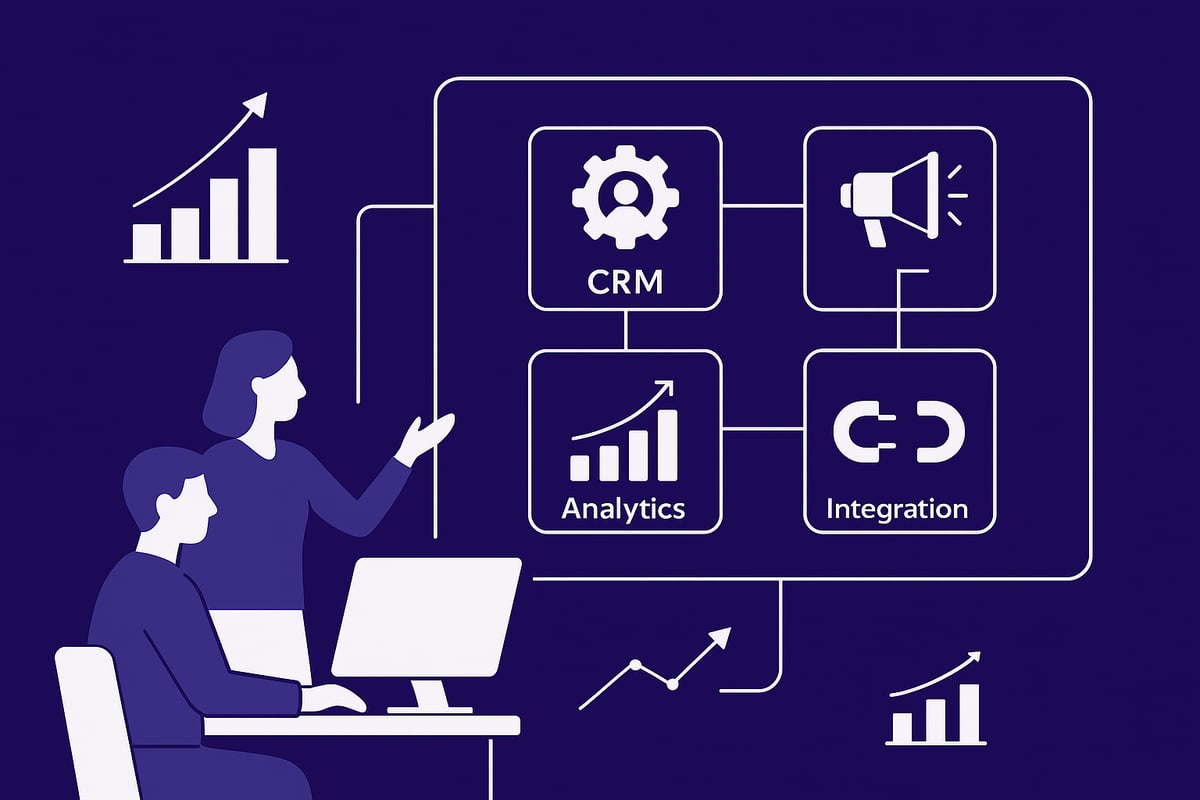
The beating heart of any modern RevOps strategy is undoubtedly the integrated CRM. Platforms such as HubSpot, Salesforce, and Zoho are not simply contact databases — they are true command centres, capable of aligning data, processes, and teams.
Imagine being able to see, in real time, the journey of every customer from the first interaction through to contract signing and beyond. A centralised CRM makes exactly this possible, offering unprecedented visibility into pipeline performance and growth opportunities. According to Axenda data, companies that adopt shared tools achieve a 20% increase in follow-ups and reduce deal closing time by 40%. A competitive advantage that translates into more stable and predictable revenue — a key pillar of RevOps success.
Beyond contact management, these platforms also automate workflows. Marketing automation and sales enablement platforms integrate features such as lead scoring, automated nurturing, campaign management, and advanced reporting. In this way, every department can work in synergy, eliminating the silos that so often slow growth.
Here is a summary of the key features of the most widely used platforms:
| Platform | Key Strengths | Scalability | Integration | Best For |
|---|---|---|---|---|
| HubSpot | Intuitive interface, comprehensive automation | High | Excellent | SMEs and corporates |
| Salesforce | Advanced customisation, powerful analytics | Very High | Excellent | Large enterprises |
| Zoho | Competitive pricing, broad ecosystem | Medium | Good | Startups and SMEs |