
How can your business enter new markets in 2026 without wasting time or valuable resources? Today, real competitive advantage is built on an effective GTM strategy — one designed to anticipate challenges and seize opportunities.
A winning GTM strategy is at the heart of success for every new product or service. In this guide, you will find practical advice, tools, and frameworks to design a truly up-to-date strategy.
You will discover the definition of a GTM strategy, how it differs from a marketing plan, the operational steps, the most effective models, and real success stories. Ready to gain a concrete edge? Keep reading and transform your business into a market leader.
What Is a GTM Strategy? Foundations and Key Components
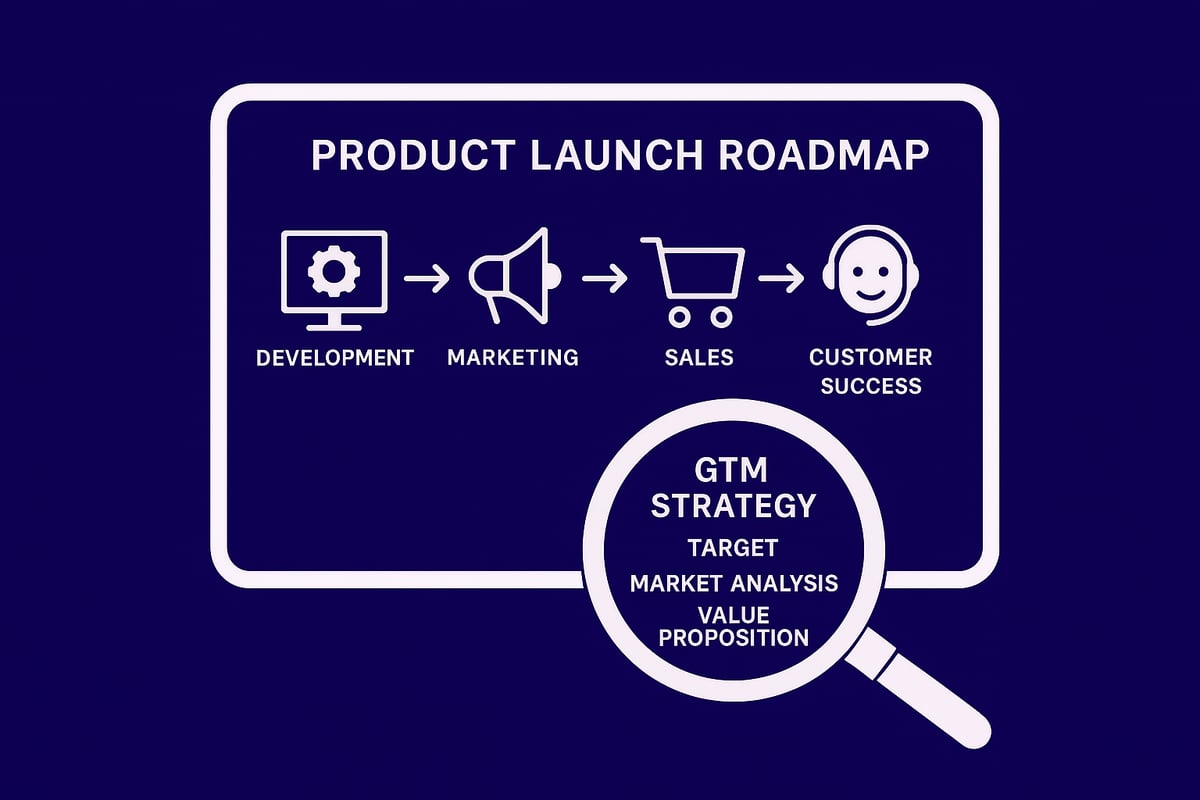
Imagine launching a new product in 2026: how do you avoid waste and maximise impact? This is exactly where a GTM strategy comes in. A GTM strategy is a detailed plan that guides the launch of products or services, connecting development, marketing, sales, and customer success into an integrated vision.
According to Stripe, 37% of companies describe themselves as "product-first" and 26% as "sales-first" — but real success comes from a GTM strategy that unites both worlds. The goal is to reduce risk, accelerate time-to-market, and ensure every phase of the launch is coordinated. To explore the definition and origins of the GTM strategy further, you can refer to this Go-to-Market Strategy Overview.
Definition of a GTM Strategy
A GTM strategy is far more than a simple marketing plan. It is a true roadmap that defines how a company brings a new product to market, who the ideal customers are, what problems it solves, and how to differentiate from competitors. Every step — from market research to customer support — is planned to deliver measurable and sustainable results.
The strength of a GTM strategy lies in aligning all business departments toward a common objective. This approach reduces the likelihood of errors, avoids waste, and ensures the message reaches the right audience loud and clear.
Essential Elements of a GTM Strategy
A successful GTM strategy is built on a series of fundamental elements:
- Market analysis: size, trends, opportunities
- Target identification: buyer persona, customer journey
- Value proposition: uniqueness and product benefits
- Competitive analysis: SWOT, benchmarking
- Positioning: differentiation and messaging
- Sales strategy: channels, team, objectives
- Marketing plan: campaigns, digital, lead generation
- Pricing and revenue model
- Distribution and logistics
- Customer support and retention
- Metrics and KPIs: results monitoring
- Budget and timeline
- Risk management and feedback loop
Integrating all these elements into a single GTM strategy allows you to anticipate market challenges and adapt quickly to change. Continuous KPI monitoring ensures every phase is optimised for maximum performance.
Practical Example of a GTM Structure
To make this more concrete, here is an example table showing how a GTM strategy could be structured for the launch of a "back to school" bundle in a stationery store:
| Section | Description | "Back to School" Bundle Example |
|---|---|---|
| Timeline | Phases and timings | Planning from May to September |
| Pain Points | Customer problems | Saving time and money for families |
| Industry Analysis | Market analysis and trends | Growing demand for school kits |
| Pitch | Sales message | "Everything you need, in a single purchase" |
| KPIs | Success metrics | Number of bundles sold, new customers |
This structure helps visualise how a well-planned GTM strategy can guide every phase of a launch, facilitating team alignment and the achievement of objectives.
GTM Strategy vs Marketing Strategy: Differences, Synergies, and Roles
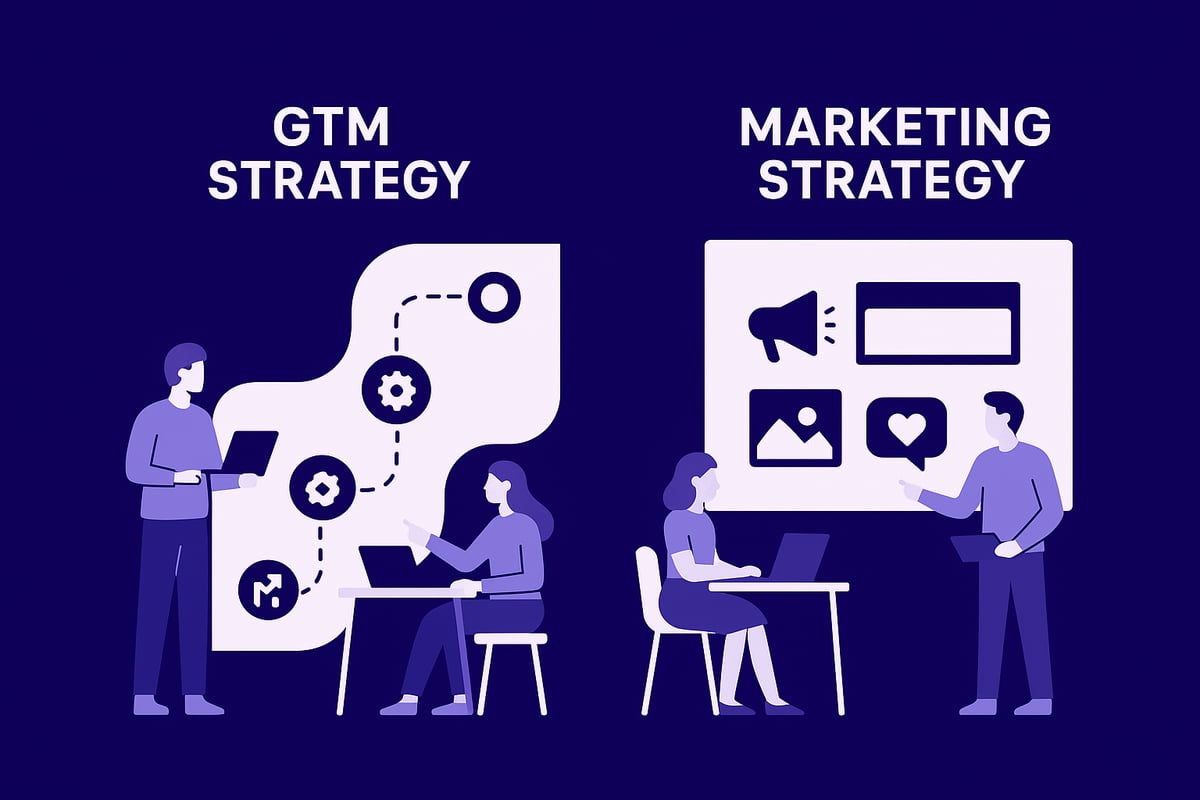
How does a GTM strategy differ from a classic marketing plan? This is a crucial question for anyone looking to launch a product successfully. The two terms are often confused, but they play different roles. The GTM strategy represents the complete roadmap guiding the launch — from concept to sale — involving development, pricing, sales, and customer success. By contrast, the marketing plan focuses on promotion and communication, becoming just one part of the broader picture. If you want to explore how to integrate digital marketing strategies for businesses, you will find they are fundamental within a structured GTM strategy.
| GTM Strategy | Marketing Strategy |
|---|---|
| Overall launch planning | Promotion and communication |
| Involves all departments | Focus on awareness and leads |
| Defines pricing, channels, support | Selects promotional messages and channels |
Operational Synergies
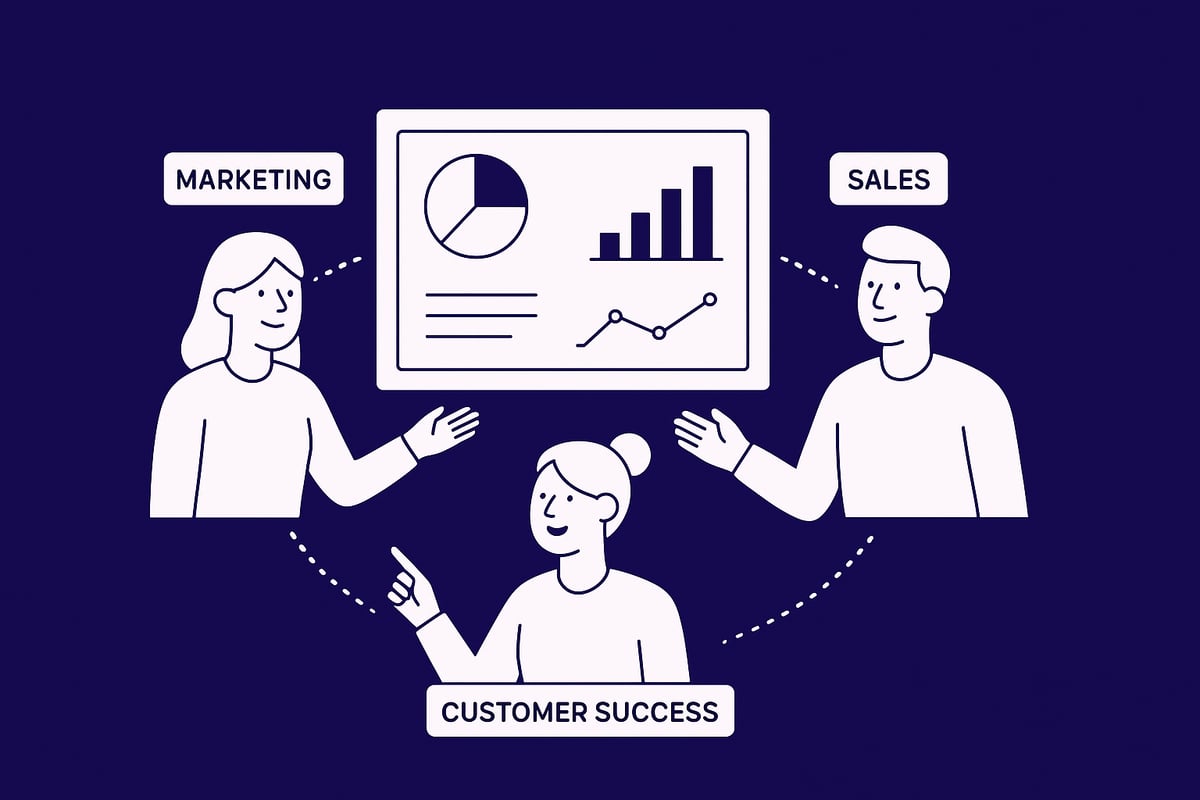
The real power comes from the integration between the GTM strategy and marketing. When teams work together — marketing, sales, and product aligned on objectives — it becomes possible to optimise resources, reduce errors, and communicate with consistency. The GTM strategy sets the overall framework and priorities, while the marketing plan translates these inputs into targeted campaigns. It is this synergy that accelerates time to market and maximises the impact of every action.
For example: if marketing knows the key features of a new bundle in advance, it can build more effective messages and prepare the market even before launch, following the direction set by the GTM strategy.
The Role of GTM in the Product Lifecycle
A GTM strategy is not only for innovative startups. It is needed by any company that wants to launch something new, expand into a new market, or test a customer segment. In scale-ups, it helps avoid waste and replicate success in new territories. In SMEs, it reduces investment risk and allows the product to be quickly adapted to the target's needs.
When introducing a new product line, entering a foreign market, or updating a SaaS platform, the GTM strategy becomes the connecting thread that unites market research, development, and promotion — ensuring consistency and control.
Concrete Examples and Competitive Advantages
Consider a SaaS case: the GTM strategy defines the launch path, pricing, and sales team training, while the marketing plan handles promoting the software through campaigns and content. According to Zendesk, companies that adopt a GTM strategy dramatically reduce launch errors and accelerate their time to market.
Here are the main competitive advantages:
- Lower operational risk
- Optimisation of company resources
- Unified message to the market
- Accelerated revenue and more stable growth
In summary, integrating a solid GTM strategy is the key to turning every launch into a success opportunity and truly differentiating from the competition.
Types of GTM Strategy: Models and Applications for 2026
In today's competitive landscape, choosing the right GTM strategy is decisive for a successful launch. But what are the most effective models and how are they applied in 2026? Let us explore the main types, emerging trends, and real cases that make a difference.
Outbound and Demand Generation
outbound strategies are the backbone for generating demand in complex markets. These include actions such as cold calling, networking events, direct mail, and social selling. outbound is often the ideal GTM strategy for B2B companies targeting rapid growth, especially when the product value is high or the sales cycle is long.
Demand generation, on the other hand, works upstream — building awareness and interest through integrated multi-channel campaigns. This involves content marketing, webinars, targeted advertising, and lead nurturing. The secret? Combining outbound and demand generation to maximise impact.
For a practical deep-dive into the differences between inbound and outbound, and how to integrate them into a modern GTM strategy, refer to a dedicated inbound vs outbound marketing guide.
Sales Enablement and ABM (Account-Based Marketing)
Sales enablement provides the sales team with the tools, content, and training needed to guide prospects through the funnel. Interactive demos, personalised pitches, and case studies are key elements. A GTM strategy that invests in sales enablement reduces friction between marketing and sales and accelerates closing.
ABM, by contrast, focuses on high-value accounts. It involves building tailored campaigns to engage all decision-making stakeholders. Personalisation is extremely high: dedicated emails, exclusive events, and specific content. This GTM strategy model is particularly effective in enterprise markets and for complex products.
Here are some useful tools:
- Email automation platforms
- Advanced CRM for segmentation
- KPI monitoring dashboard
GTM for SaaS, B2B, B2C, and Startups
Every business model requires a tailored GTM strategy. For SaaS, the focus is often on subscription models, free trials, and fast onboarding. Here, speed of user acquisition and retention are fundamental.
In B2B, the GTM strategy must manage long sales cycles and multiple decision-makers. There is a strong emphasis on relationships, referrals, and workshops. B2C, by contrast, prioritises rapid time-to-market, mass campaigns, and dynamic pricing.
Startups often use the GTM strategy to test new segments or markets, focusing on MVPs (Minimum Viable Products) and rapid feedback. Here is a summary table:
| Model | GTM Strategy Focus | Main Channels |
|---|---|---|
| SaaS | Acquisition and retention | Digital, trial, demo |
| B2B | Relationships and personalisation | Events, outbound, ABM |
| B2C | Volume and speed | Social, e-commerce |
| Startup | Validation and testing | MVP, direct feedback |